
The most significant shock the film industry has encountered in 2025? The resurgence of horror as a leading genre at the British cinemas.
As a category, it has remarkably outperformed past times with a 22% year-on-year increase for the UK and Ireland film earnings: £83.7 million in 2025, against £68 million the previous year.
“Previously, zero horror films made £10 million in the UK or Ireland. Currently, five have surpassed that mark,” says a box office editor.
The major successes of the year – a recent horror title (£11.4m), another hit film (£16.2 million), the latest Conjuring installment (£14.98 million) and 28 Years Later (£15.54 million) – have all stayed in the multiplexes and in the public consciousness.
While much of the industry commentary centers on the singular brilliance of certain directors, their successes point to something evolving between moviegoers and the genre.
“I’ve heard people say, ‘Even if you don’t like horror this is a film you need to see,’” explains a head of acquisition.
“Such movies experiment with style and format to produce entirely fresh content, connecting with viewers on a new level.”
But outside of creative value, the consistent popularity of frightening features this year indicates they are giving audiences something that’s much needed: therapeutic relief.
“These days, movies echo the prevalent emotions of rage, anxiety, and polarization,” says a film commentator.
“Scary movies excel at tapping into viewers' fears, amplifying them, allowing you to set aside daily worries and concentrate on the on-screen terror,” remarks a respected writer of vampire and monster cinema.
Amid a global headlines featuring conflict, immigration issues, political shifts, and climate concerns, witches, zombies and vengeful spirits resonate a bit differently with filmg oers.
“I read somewhere that the success of vampire movies is linked to economically depressed times,” states an performer from a successful fright film.
“It’s the idea that capitalism sucks the life out of people.”
Since the early days of cinema, social unrest has influenced the genre.
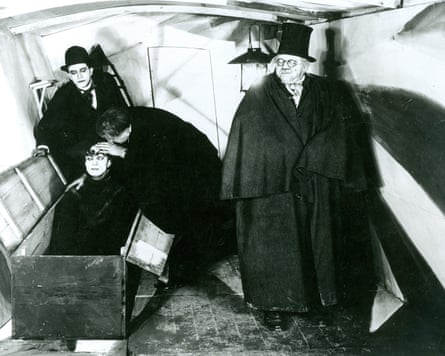
Scholars reference the surge of German expressionism after the the Great War and the chaotic atmosphere of the 1920s Europe, with movies such as The Cabinet of Dr Caligari and Nosferatu: A Symphony of Horror.
Subsequently came the 1930s depression and classic monster movies.
“Take Dracula: it depicts an Eastern European figure invading Britain, spreading a metaphorical infection that endangers local protagonists,” explains a commentator.
“Thus, it mirrors widespread fears about migration.”
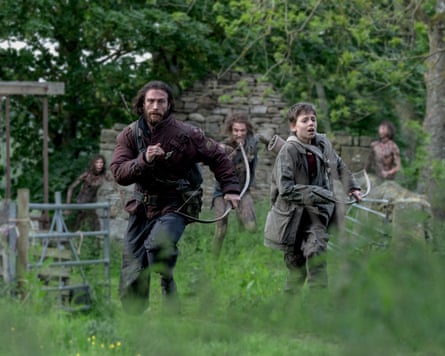
The specter of immigration shaped the newly launched supernatural tale The Severed Sun.
The creator clarifies: “I wanted to explore ideas around the rise of populism. Firstly, slogans like ‘Let’s Make Britain Great Again’, that harken back to some fantasy time when things were ‘better’, but only if you were a rich white man.”
“Also, the concept of familiar individuals revealing surprising prejudices in casual settings.”
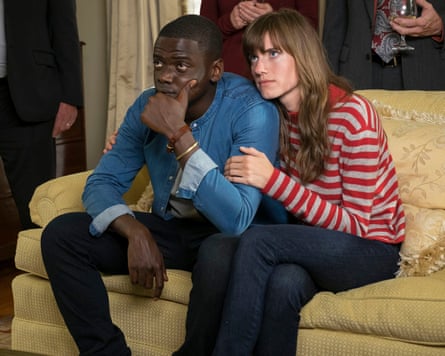
Arguably, the present time of praised, culturally aware scary films started with a clever critique debuted a year after a divisive leadership period.
It ushered in a fresh generation of innovative filmmakers, including several notable names.
“That period was incredibly stimulating,” says a director whose film about a deadly unborn child was one of the time's landmark films.
“In my view, it marked the start of a phase where filmmakers embraced wildly creative horror with artistic ambitions.”
The director, currently developing another scary story, continues: “Over 10 years, audiences’ minds have been opening up to much more of that.”
Concurrently, there has been a reappraisal of the overlooked scary films.
In recent months, a nicke l venue opened in a major city, showing cult classics such as a quirky horror title, a classic adaptation and the modern reinterpretation of Dr Caligari.
The renewed interest of this “gritty and loud” genre is, according to the venue creator, a clear response to the calculated releases pumped out at the box office.
“This responds to the sterile output from major studios. Today's cinema is safer and more repetitive. Many popular movies feel identical,” he says.
“On the other hand, [these indie works] feel imperfect. They seem to burst forth from deep creativity, free from commercial constraints.”
Horror films continue to challenge the norm.
“They have this strange ability to seem old fashioned and up to the minute, both at the same time,” notes an authority.
Alongside the revival of the deranged genius archetype – with two adaptations of a classic novel on the horizon – he anticipates we will see scary movies in the coming years responding to our present fears: about tech supremacy in the near future and “monstrous metaphors in power structures”.
Meanwhile, a biblical fright story The Carpenter’s Son – which narrates the tale of Mary and Joseph’s struggles after Jesus’s birth, and stars well-known actors as the sacred figures – is scheduled to debut in the coming months, and will certainly send a ripple through the religious conservatives in the America.</


